
White Spots on Tongue: What Are They, What Causes Them, and When Should You See a Dentist?
Noticing something unusual on your tongue — a white patch, a cluster of white spots, or a coating that has not been there before — is the kind of thing that sends most people straight to a search engine. And the results, predictably, range from the entirely reassuring to the genuinely alarming.
The truth, as it usually is in medicine and dentistry, sits somewhere in between.
White spots on the tongue are common and most causes are entirely benign. But some causes are not, and knowing the difference — and knowing when to get something properly assessed — genuinely matters. This guide covers the full spectrum: the common, the uncommon and the ones that need to be seen promptly.
At Avenue Dental Practice in Leamington Spa, led by Dr Bobby Bhandal GDC No. 244340, we carry out thorough oral health assessments at every check-up, including examination of the tongue, cheeks and all soft tissues — precisely because changes in the mouth that patients might notice at home sometimes need clinical eyes to interpret correctly.
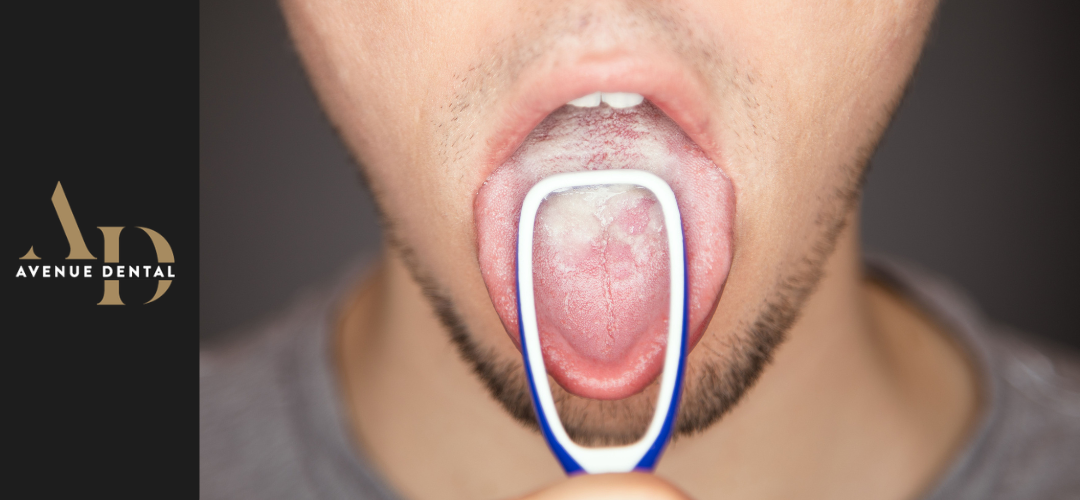
The Anatomy of the Tongue: Why It Can Look Unusual
Before getting into specific causes, it helps to understand why the tongue is prone to visible changes in the first place.
The dorsal surface of the tongue — the top surface you can see in the mirror — is covered in small projections called papillae. These give the tongue its characteristic texture and house the taste buds. There are several types:
- Filiform papillae: The most numerous, covering the majority of the tongue surface. They do not contain taste buds and can appear elongated or discoloured in certain conditions.
- Fungiform papillae: Scattered among the filiform papillae, slightly larger, containing taste buds. They can appear red or white depending on the condition of the tongue.
- Circumvallate (vallate) papillae: A row of larger papillae across the back of the tongue. These are often mistaken for something abnormal by patients who notice them for the first time — they are entirely normal anatomical structures.
- Foliate papillae: Along the sides of the back of the tongue. Again, these are normal structures that can appear raised or slightly reddened.
Understanding this normal anatomy helps contextualise why certain appearances on the tongue are normal variants and why others represent a change from normal that warrants assessment.
White Spots on Tongue: The Most Common Causes
1. Oral Thrush (Oral Candidiasis)
Oral thrush is a fungal infection caused by an overgrowth of Candida albicans — a yeast that lives naturally in the mouth in small numbers. When the balance of the oral microbiome is disrupted, Candida can proliferate and produce visible white patches.
What it looks like: Creamy white patches that can appear on the tongue, the inner cheeks, the roof of the mouth and sometimes the throat. The patches may look like cottage cheese or curdled milk and, importantly, can be wiped off — leaving behind a red, sometimes sore surface underneath.
Who gets it: Oral thrush most commonly affects:
- Denture wearers (particularly if dentures are not cleaned properly or worn overnight)
- People taking antibiotics (which disrupt the bacterial balance that keeps Candida in check)
- People using steroid inhalers (if not rinsing the mouth after use)
- Patients undergoing chemotherapy or radiotherapy
- People with diabetes, HIV or other conditions affecting immune function
- Infants and very young children
Treatment: Oral thrush is treated with antifungal medication — typically nystatin suspension or fluconazole tablets, prescribed by a GP or dentist. The underlying cause (poorly controlled diabetes, inhaler technique, denture hygiene) should also be addressed to prevent recurrence. Regular dental hygiene appointments can help identify early signs and support proper cleaning of dentures.
2. Leukoplakia
Leukoplakia is defined as a white patch or plaque on the oral mucosa that cannot be scraped off and cannot be attributed to any other known cause. It is a clinical diagnosis of exclusion — other causes are ruled out before the term leukoplakia is applied.
This is the white patch presentation that requires the most careful clinical attention. While the majority of leukoplakia lesions are benign, a proportion carry malignant potential — meaning they can, if left unmonitored, develop into oral cancer. The risk varies significantly depending on the site, the clinical appearance and other factors.
What it looks like: White or greyish-white patches, which may be flat and homogeneous, or raised and irregular. Unlike oral thrush, these patches cannot be wiped away.
Risk factors:
- Tobacco use (smoking and particularly chewing tobacco dramatically increase the risk of leukoplakia and malignant transformation)
- Alcohol consumption, particularly in combination with tobacco
- Chronic friction from a sharp tooth edge or ill-fitting denture
- HPV infection (certain strains)
What to do: Any white patch on the tongue or oral mucosa that does not resolve within two weeks, or that cannot be attributed to a clear, benign cause, should be assessed by a dentist or oral medicine specialist. A biopsy may be recommended to determine the nature of the tissue. This is not cause for immediate panic — the vast majority of leukoplakia lesions are benign — but it is cause for proper assessment rather than continued monitoring at home. A dental check-up is the appropriate first step.
3. Canker Sores (Aphthous Ulcers)
Canker sores are among the most common causes of white spots on the tongue and oral mucosa, affecting a significant proportion of the population at some point. They are not caused by a virus and are not contagious.
What they look like: Small, round or oval ulcers with a white or yellowish centre and a red border. They are typically painful — often disproportionately so relative to their size — and can make eating, drinking and speaking uncomfortable.
Why they occur: The precise cause of aphthous ulcers is not fully understood, but triggers include:
- Minor trauma (biting the tongue or cheek, a sharp food, a dental procedure)
- Stress and fatigue
- Hormonal changes (many women notice a pattern around menstruation)
- Certain foods (citrus, tomatoes, chocolate, nuts and spicy foods are commonly reported triggers)
- Nutritional deficiencies (iron, B12, folate and zinc deficiencies are associated with increased ulcer frequency)
- Coeliac disease and inflammatory bowel disease are associated with recurrent oral ulceration
Timeline: Simple aphthous ulcers heal on their own within seven to fourteen days. They do not require specific treatment in most cases, though topical gels containing benzydamine or corticosteroids can reduce pain and healing time.
When to seek assessment: An ulcer that has not healed after three weeks should always be assessed by a dentist, regardless of how benign it looks. Oral cancer can present as a persistent, painless ulcer — the absence of pain is not reassurance. A dental check-up at Avenue Dental Practice includes soft tissue examination of the entire mouth as standard.
4. Geographic Tongue (Benign Migratory Glossitis)
Geographic tongue is a harmless but often visually striking condition in which the tongue develops smooth, red patches surrounded by white or whitish-yellow borders, giving it a map-like appearance. The patches change location over days and weeks — hence “migratory.”
What causes it: The exact cause is unknown, but there is a likely genetic component. It is also associated with psoriasis, atopic conditions and stress. It is not contagious, not an infection and not a sign of cancer.
Symptoms: Most people with geographic tongue have no symptoms at all. Some experience mild sensitivity to spicy, acidic or hot foods. The condition tends to come and go throughout life.
What to do: Geographic tongue does not require treatment. If the appearance is concerning you, having it confirmed as geographic tongue by a dentist at a check-up gives you the reassurance of a clinical diagnosis rather than self-diagnosis from a search engine.
5. Oral Lichen Planus
Oral lichen planus is a chronic inflammatory condition affecting the oral mucosa. It can present in several ways, but the white striated (lace-like) pattern — called Wickham’s striae — is one of the most characteristic appearances, often seen on the cheeks but also on the tongue.
What it looks like: A network of white lines or patches on the tongue or cheek tissue. The erosive form of oral lichen planus can also produce red, sore areas that are painful and affect eating.
Who gets it: Oral lichen planus is more common in middle-aged adults, particularly women. The cause is thought to be an abnormal immune response. It is associated with certain medications, hepatitis C infection and, in some cases, dental materials.
Clinical significance: Oral lichen planus is not infectious, but some forms — particularly the erosive type — carry a small risk of malignant transformation over many years. Regular monitoring by a dentist is recommended for anyone with a confirmed diagnosis.
6. Fibroma and Other Benign Growths
Localised white or pale raised areas on the tongue can sometimes represent a fibroma — a benign overgrowth of fibrous tissue — or other benign soft tissue tumours. These typically arise from chronic friction or irritation (a sharp tooth edge, a broken restoration, a habit of biting the tongue in the same spot).
They are not dangerous but may be removed surgically if they are large, uncomfortable or cosmetically troubling. Addressing the source of irritation — such as smoothing a sharp tooth edge — is part of the management.
7. Hairy Tongue (Black or White)
Hairy tongue is a harmless but startling-looking condition caused by an elongation of the filiform papillae, which can reach several millimetres in length and trap bacteria, yeast and debris. The tongue can appear white, brown or black depending on the organisms colonising the elongated papillae.
Common causes:
- Antibiotic use (particularly broad-spectrum antibiotics)
- Poor oral hygiene
- Heavy coffee or tea consumption
- Tobacco use
- Dry mouth
Treatment: Hairy tongue usually resolves with improved oral hygiene — thorough tongue cleaning — and addressing the contributing factors. In most cases no specific medical treatment is needed.
8. Mouth Ulcers From Trauma
Sometimes white spots on the tongue are simply the result of physical trauma — a bite, a scratch from sharp food, a poorly fitted denture edge, or irritation from a dental restoration. Traumatic ulcers look similar to aphthous ulcers but have a clear history of trauma at the same site.
These typically heal within a week or two once the source of irritation is removed. If a sharp tooth or restoration is the cause, having it smoothed at a dental check-up removes the ongoing trigger and allows healing to proceed.
The White Patch That Must Always Be Assessed: Oral Cancer
This section is not included to cause alarm — it is included because informed patients make better decisions, and because early detection of oral cancer dramatically improves outcomes.
Oral cancer can present as:
- A white or red patch (or a mixture of both — called erythroleukoplakia) on the tongue or oral mucosa
- A persistent ulcer that does not heal within three weeks
- A lump or thickening in the tongue or floor of the mouth
- Unexplained numbness or pain in the mouth or lips
- Difficulty swallowing or a sensation that something is stuck
Risk factors for oral cancer include tobacco use, alcohol consumption (particularly in combination with tobacco), HPV infection, and prolonged sun exposure (relevant to lip cancer). However, oral cancer also occurs in patients with none of these risk factors — which is precisely why regular soft tissue examination at a dental check-up is so important for everyone, not just those who smoke or drink.
The rule for patients is simple: any white patch, ulcer or soft tissue change in the mouth that has been present for three weeks without resolving should be seen by a dentist. Not because it is likely to be cancer — it almost certainly is not — but because three weeks is long enough to have ruled out a transient, benign cause and short enough to act early if something more significant is present.
At Avenue Dental Practice, Dr Bobby Bhandal GDC No. 244340 carries out thorough soft tissue examinations as a standard component of every check-up, not an optional extra. This is one of the most important things a routine dental appointment does.
What Happens at a Soft Tissue Assessment?
If you attend a dental check-up with a white patch or spot on your tongue, here is what to expect:
- Clinical history: When did you first notice it? Has it changed in size or appearance? Is it painful? Have you had any recent illness, new medications, or changes in diet? Do you smoke or drink alcohol?
- Visual examination: The tongue, cheeks, floor of the mouth, palate and throat are examined systematically. The size, colour, texture and borders of any white patch are noted. Whether the patch can be wiped off (consistent with thrush) or remains firmly in place (more significant clinically) is assessed.
- Palpation: The dentist gently feels the area with a gloved finger. A patch that feels indurated (hardened or firm) beneath the surface is more clinically significant than one that feels the same as the surrounding tissue.
- Differential diagnosis: Based on the clinical picture, a likely diagnosis is formed and other causes are considered.
- Decision: In many cases, a short period of monitoring (two to three weeks) is appropriate for an apparent aphthous ulcer or traumatic patch, after which reassessment determines whether healing has occurred. Where a lesion is more suspicious — persistent, non-healing, associated with risk factors, or with features that concern the clinician — referral to an oral medicine specialist or oral surgeon for biopsy is arranged promptly.
The Role of Oral Hygiene in Preventing Tongue Problems
Many of the more common and benign causes of white spots on the tongue — including hairy tongue, mild oral thrush and bacterial build-up on the tongue surface — are either prevented or significantly reduced by good oral hygiene, including tongue cleaning.
The tongue surface, with its complex papillary texture, is an ideal harbour for bacteria, dead cells and food debris. This accumulation creates the coating that many people notice — often thickest in the morning and at the back of the tongue — and contributes to both bad breath and some of the white appearances that cause concern.
Tongue cleaning — using a tongue scraper or the reverse side of a toothbrush — as part of the daily oral hygiene routine removes this coating consistently and is one of the simplest ways to maintain a healthier tongue surface.
Regular dental hygiene appointments also contribute: a hygienist can assess the tongue and oral tissues at each visit, identify early changes, and advise on effective home care. Patients who attend regularly are significantly more likely to have any early changes in the mouth identified before they become clinically significant.
For Patients Who Find Dental Appointments Difficult
We are aware that for some patients, even a routine check-up or soft tissue examination creates anxiety — and that this anxiety is sometimes the reason people delay getting something assessed that they know, on some level, they should have looked at sooner.
At Avenue Dental Practice, we work regularly with nervous patients. Dr Bobby Bhandal and the team take a careful, unhurried approach to every appointment — explaining what is being done, moving at the patient’s pace, and never pressuring. If you know that anxiety has been putting you off getting a white patch or tongue change properly assessed, please contact us before your appointment so we can make appropriate arrangements. Dental anxiety should never be the reason something significant is caught late.
When Is a White Spot on the Tongue a Dental Emergency?
Most white spots on the tongue are not emergencies — they can be assessed at a routine appointment. However, the following symptoms warrant same-day contact with a dentist:
- Rapid swelling of the tongue or floor of the mouth
- Difficulty swallowing or breathing alongside tongue changes
- Severe pain that has developed suddenly in the mouth
- White patches accompanied by fever and feeling generally unwell
- A knocked-out tooth or significant mouth trauma
Our emergency dentist service in Leamington Spa is available for situations that cannot wait for a routine appointment.
The Bottom Line
White spots on the tongue are common, and the vast majority of causes are entirely treatable or self-resolving. Oral thrush, aphthous ulcers, geographic tongue and trauma-related patches account for most of what people notice — and all of these are manageable with appropriate care.
What matters is not panicking unnecessarily on one hand, or dismissing something persistent on the other. The practical rule is this: any white patch or spot on the tongue that has not resolved within three weeks should be properly assessed by a dentist. Most of the time you will leave with a reassuring diagnosis. On the occasions where something needs to be looked at more carefully, you will be glad you came in early.
At Avenue Dental Practice in Leamington Spa, Dr Bobby Bhandal GDC No. 244340 includes a thorough soft tissue examination at every dental check-up, gives you an honest assessment of what is found, and ensures anything that needs further investigation is acted upon promptly. If you have a concern about a white spot or patch on your tongue, getting in touch and booking an assessment is always the right call.
Medical and dental information disclaimer
The information in this article is intended for general educational guidance only and does not constitute personalised dental or medical advice. If you are concerned about a white patch, ulcer or change in your mouth, please book an appointment with a qualified dental professional for a proper clinical assessment.
Avenue Dental Practice is a private dental practice in Leamington Spa, led by Dr Bobby Bhandal GDC No. 244340. We offer dental check-ups, dental hygiene appointments, emergency dental care, support for nervous patients, dental implants, Invisalign, composite bonding, porcelain veneers, teeth whitening, dental crowns, sedation and smile makeovers.
Frequently asked questions about white spots on tongue
No — the vast majority of white spots on the tongue have a benign, treatable cause such as oral thrush, aphthous ulcers, geographic tongue or minor trauma. However, persistent white patches that do not resolve within three weeks should always be assessed by a dentist, because while unlikely, some white patches carry malignant potential and early detection significantly improves outcomes. A dental check-up with soft tissue examination is the appropriate first step.
The most useful distinguishing feature at home is whether the white patch can be wiped off. Oral thrush typically produces patches that wipe away, leaving a red, sometimes sore surface. Patches that cannot be wiped off — particularly if they have been present for more than two to three weeks — need clinical assessment. However, self-assessment has significant limitations and should not replace a professional examination by a dentist.
Book a dental check-up promptly. Two weeks is sufficient time for a straightforward aphthous ulcer or traumatic patch to heal — if it has not, it needs to be examined properly. This does not mean the cause is serious, but it means the cause cannot be assumed to be benign any longer without clinical assessment. At Avenue Dental Practice, soft tissue examination is included as a standard part of every check-up appointment.
Yes, in some cases. Poor oral hygiene allows bacteria and yeast to accumulate on the tongue surface, contributing to coating, discolouration and conditions like hairy tongue. It also creates an environment more conducive to oral thrush. Improving oral hygiene — including tongue cleaning and regular dental hygiene appointments — reduces these risks and helps maintain healthier tongue tissue overall.
Yes — and we understand that dental anxiety is real and significant, not something to be dismissed. At Avenue Dental Practice, we have specific experience with nervous patients and take a calm, unhurried approach to every appointment. If anxiety has been putting you off getting a tongue change assessed, please contact us before your appointment and we will make sure you are comfortable with how the appointment will be handled. Getting something properly assessed — even nervously — is always better than not going at all.

