
How to Clean Your Tongue: The Step Most People Skip (and Why It Matters More Than You Think)
You brush your teeth twice a day. You might even floss. But if you are not cleaning your tongue, you are leaving behind one of the biggest sources of bacteria in your entire mouth — and wondering why your breath is not as fresh as it should be.
Tongue cleaning is one of the most underrated habits in oral hygiene. It takes about 30 seconds, costs next to nothing if you use the right tool, and makes a genuinely noticeable difference to your breath, the taste of your food and the overall health of your mouth.
At Avenue Dental Practice in Leamington Spa, led by Dr Bobby Bhandal GDC No. 244340, we talk to patients about tongue cleaning regularly because it is one of those simple changes that delivers real results. This guide covers everything you need to know: why the tongue matters, how to clean your tongue properly, which tools actually work, and what your tongue can tell you about your wider health.
Why Your Tongue Needs Cleaning
Your tongue is not a smooth surface. Under a microscope, it looks more like a dense carpet: covered in tiny projections called papillae, between which bacteria, dead cells, food debris and mucus can accumulate. This layer of build-up is what gives the tongue that white, yellow or grey coated appearance that many people notice in the mirror.
This coating is not just cosmetic. It is a bacterial colony, and it is actively contributing to several oral health concerns:
- Bad breath: Research consistently shows that the tongue is responsible for the majority of bad breath cases — more than gum disease, more than cavities, more than anything else. The bacteria living on the tongue surface produce volatile sulphur compounds (VSCs), which are the compounds responsible for that classic unpleasant smell. Brushing your teeth addresses the teeth. It does nothing meaningful for the coating on your tongue.
- Altered taste: A thick coating on the tongue can dull the taste receptors underneath, making food and drink taste less vivid than it should. Many patients who start cleaning their tongue report that food simply tastes better within a few days. This is not a placebo effect — it is the result of taste buds being unblocked.
- Bacterial transfer: The bacteria on your tongue do not stay there. Every time you swallow, every time your tongue contacts your teeth and gums, those bacteria are being transferred around the mouth. Keeping the tongue clean reduces the overall bacterial load in your mouth, which supports healthier gums and teeth.
- Oral health and general health: Emerging research continues to explore the relationship between oral bacteria and systemic health, including links to cardiovascular disease, diabetes management and respiratory health. Keeping the tongue clean is part of the broader picture of good oral hygiene, which your dental hygienist will always emphasise during appointments.
How to Clean Your Tongue: The Right Way
Knowing how to clean your tongue properly takes about two minutes to learn and becomes second nature within a week. Here is exactly what to do.
Using a Tongue Scraper
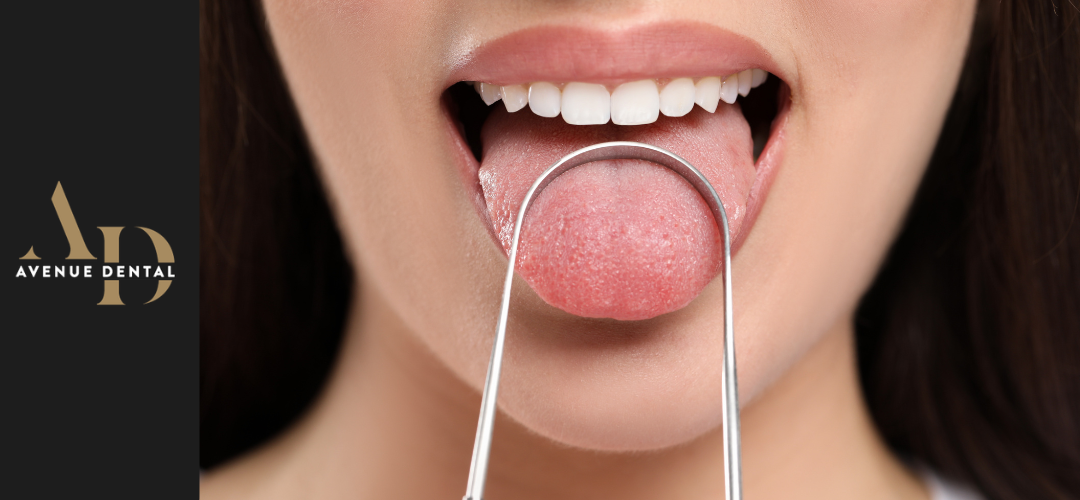
Tongue scraper cleaning is the gold standard method, and for good reason. A tongue scraper is a simple, inexpensive tool — usually made from stainless steel or plastic — shaped in a U or arc form that is designed to glide across the tongue surface and physically remove the coating of bacteria, mucus and debris.
Here is the correct technique:
- Start at the back: Place the scraper as far back on your tongue as is comfortable without triggering your gag reflex. For most people this is roughly two thirds of the way back. You will get further back as you become more comfortable with the process.
- Apply gentle pressure and pull forward: Using light, even pressure, draw the scraper forward along the tongue surface towards the tip. You do not need to press hard — the scraper does the work.
- Rinse and repeat: After each stroke, rinse the scraper under running water to clear the debris. Repeat the stroke three to five times, working across the full width of the tongue.
- Rinse your mouth: Once you have finished, rinse your mouth with water to clear any loosened debris.
- Clean the scraper: Wash the scraper thoroughly with soap and water before storing it.
When to do it: Tongue cleaning fits most naturally into your morning routine, immediately after brushing your teeth. Many people also do it last thing at night. Doing it once a day is sufficient for most people; twice a day is fine if preferred.
Stainless steel vs plastic scrapers: Both work. Stainless steel scrapers last indefinitely, are easy to sanitise thoroughly and are more environmentally friendly. Plastic scrapers are cheaper to start with but wear out over time. Either is far more effective than using a toothbrush for this purpose.
Can You Use a Toothbrush to Clean Your Tongue?
Yes, and it is better than doing nothing. However, tongue scraper cleaning is measurably more effective than brushing. A toothbrush tends to push the coating around rather than remove it, and the bristle action can irritate the papillae on the tongue surface if done too firmly. If you do not yet have a scraper, use the reverse side of a toothbrush (many have a ribbed texture designed for this purpose) until you get one.
Mouthwash and the Tongue
An antibacterial mouthwash used after tongue scraper cleaning can help further reduce bacterial levels on the tongue surface. However, mouthwash alone does not remove the physical coating — it only addresses the bacteria present in the liquid. Physical removal with a scraper first, followed by a mouthwash rinse, is more effective than mouthwash alone.
What Does a Coated Tongue Mean?
A white or yellowish coating on the tongue is almost always a build-up of bacteria, dead cells and food debris — completely normal and entirely addressable through regular cleaning. However, there are some presentations of tongue coating that are worth discussing with a dentist.
- Thick, persistent white coating that does not improve with cleaning: This can occasionally indicate oral thrush (a fungal infection), which is more common in people who smoke, wear dentures, or have a compromised immune system. It requires treatment with antifungal medication.
- White patches that cannot be wiped away: This could indicate a condition called leukoplakia, which requires proper assessment. Most cases are benign but some can be pre-cancerous, so it is always worth having it checked at a dental check-up.
- A bright red or smooth, shiny tongue: This can be associated with nutritional deficiencies, particularly B12, iron or folate. If you notice this alongside fatigue or other symptoms, it is worth mentioning to your GP as well as your dentist.
- Black or dark brown hairy appearance: A condition called black hairy tongue, which sounds alarming but is almost always benign. It is caused by an overgrowth of the papillae and is often associated with antibiotic use, poor oral hygiene, heavy smoking or strong coffee and tea consumption. It typically resolves with improved oral hygiene and addressing the contributing factors.
If you notice any change in the appearance of your tongue that persists beyond two weeks, or that you are not sure about, book an appointment with your dentist. At Avenue Dental Practice, we carry out thorough oral health assessments including soft tissue checks at every check-up.
The Connection Between Tongue Cleaning and Fresh Breath
This is probably the most immediately motivating reason most people start cleaning their tongue — and the results are often noticeable quickly.
Studies examining the causes of bad breath (halitosis) consistently attribute 50 to 80 percent of cases to tongue bacteria. The coating on the tongue surface creates an anaerobic environment — low in oxygen — which is exactly the condition in which VSC-producing bacteria thrive. These bacteria feed on protein from food debris and dead cells, producing hydrogen sulphide and methyl mercaptan as byproducts.
Brushing your teeth reduces bacterial levels on the tooth surfaces and gum line. It does not address the tongue, which means for many people, the primary source of their bad breath remains completely untouched after their morning brush.
Adding tongue scraper cleaning to your daily routine removes the physical substrate the bacteria live on, rather than just rinsing across the top of it. The difference in breath freshness is often noticeable within the first few days.
That said, if your bad breath is persistent and does not respond to improved tongue cleaning and oral hygiene, it is worth having a proper clinical assessment. Persistent bad breath can be linked to gum disease, tooth decay, dry mouth or systemic conditions — all of which need professional assessment and treatment. Your dental hygienist is the best starting point for this kind of investigation.
Tongue Cleaning as Part of a Complete Oral Hygiene Routine
Tongue cleaning does not replace any part of your existing routine — it adds to it. Here is what a complete daily oral hygiene routine looks like:
- Morning brush: Two minutes with a fluoride toothpaste, covering all surfaces of all teeth
- Tongue scraper cleaning: Three to five strokes from back to front, rinsing the scraper between each pass
- Interdental cleaning: Floss or interdental brushes used between every tooth, once a day — this is typically most effective last thing at night
- Evening brush: Two minutes again, last thing before bed
- Mouthwash: Used as a supplement after brushing, not a replacement for it
The whole routine, including tongue cleaning, takes approximately five minutes. It is the most cost-effective health investment most people can make.
Your dental hygienist can assess your technique for each of these steps and show you exactly where you are missing. This kind of hands-on, personalised guidance is far more valuable than reading instructions alone. Regular hygiene appointments also remove the tartar build-up that home cleaning cannot address, keeping both your teeth and your overall oral environment in the best possible condition.
What Your Dental Team Can See That You Cannot
One of the most important reasons to attend regular dental check-ups is that your dental team can identify changes in your mouth — including on your tongue — that are easy to miss at home or in a bathroom mirror.
At Avenue Dental Practice, Dr Bobby Bhandal and the team carry out thorough soft tissue examinations as part of every check-up. This includes examining the tongue, the floor of the mouth, the cheeks and the throat for any changes in colour, texture or appearance that warrant further investigation. Oral cancer screening is included in this examination.
Early detection of any soft tissue changes is significantly better than late detection. Attending check-ups every six months is the standard recommendation, and it is one of the simplest things you can do to stay on top of your oral health.
For Patients Who Find Dental Visits Difficult
We know that for some people, the thought of a dental appointment — even a routine check-up or hygiene visit — creates real anxiety. At Avenue Dental Practice, we work regularly with nervous patients and understand that dental anxiety is not something you can simply talk yourself out of.
We take extra time with nervous patients, explain everything before we do it and never rush an appointment. If your anxiety is significant, there are additional options available to help make your visits manageable and comfortable. Please get in touch before your appointment so we can make the right arrangements for you — there is no judgement here, only support.
Avoiding the dentist because of anxiety is one of the most common reasons oral health problems are caught late rather than early. We would much rather know you need extra reassurance and plan accordingly than have you stay away altogether.
When to Book an Emergency Appointment
If you notice any of the following, do not wait for a routine appointment:
- A new ulcer or sore on the tongue that has not healed after two weeks
- Sudden swelling of the tongue or floor of the mouth
- A lump or thickening on the tongue that was not there before
- A sudden, severe toothache or dental pain alongside changes in your tongue or mouth
- Difficulty swallowing or an unexplained persistent sore throat
Our emergency dental service in Leamington Spa is available for situations that cannot wait. Call us and we will assess you as quickly as possible.
The Bottom Line
Tongue cleaning is one of the simplest improvements you can make to your oral health routine, with some of the most noticeable results. It takes 30 seconds, costs very little once you have a good scraper, and removes the single largest source of bad breath bacteria that most people’s routines completely miss.
Tongue scraper cleaning, done once daily as part of a consistent oral hygiene routine, combined with regular professional care from a dental hygienist and check-ups with your dentist, gives you the most complete approach to oral health available.
At Avenue Dental Practice in Leamington Spa, Dr Bobby Bhandal GDC No. 244340 and the team are here to support your oral health at every level — from the simple habits you build at home to the professional care that home cleaning can never fully replace. If you have any questions, want to book a hygiene appointment, or simply want to know more about how to clean your tongue properly in the context of your own oral health, we would be happy to help. Get in touch with us here.
Medical and dental information disclaimer
The information in this article is intended for general guidance only and does not constitute personalised dental or medical advice. If you have any concerns about your oral health or the appearance of your tongue, please book an appointment with a qualified dental professional for a proper clinical assessment.
Avenue Dental Practice is a private dental practice in Leamington Spa, led by Dr Bobby Bhandal GDC No. 244340. We offer a full range of dental services including dental check-ups, professional hygiene appointments, Invisalign, composite bonding, porcelain veneers, teeth whitening, dental implants, sedation, smile makeovers and emergency dental care.
Frequently asked questions about tongue scraping
Once a day is sufficient for most people, and the morning is typically the best time — the coating on the tongue tends to be thickest after a night’s sleep. If you find it helpful to clean your tongue in the evening as well, that is completely fine. The key is consistency: doing it daily makes a far greater difference than doing it occasionally.
Yes, when done correctly. Using gentle, even pressure and working from back to front, tongue scraper cleaning is entirely safe and comfortable. The most common mistake is pressing too hard, which can cause mild discomfort. You do not need significant pressure — the scraper is designed to remove loose coating, not scrub the tongue surface.
A slight whitish appearance on the tongue after cleaning is normal — it is not possible to remove every trace of coating with a single session, and some residual appearance is expected. If the coating is very thick, persistent, or does not improve after several weeks of daily cleaning, it is worth mentioning at your next dental check-up. In some cases, a persistent white coating can indicate oral thrush or another condition that needs treatment.
For many people, yes — tongue cleaning makes a significant and noticeable difference to breath freshness because the tongue is the primary source of bad breath in most cases. However, if your bad breath persists despite regular tongue cleaning and good overall oral hygiene, there may be another contributing factor such as gum disease, tooth decay or dry mouth. A hygiene appointment is the best next step to identify and address the cause properly.
Absolutely. At Avenue Dental Practice, we see nervous patients regularly and our approach is always patient-led and pressure-free. We explain everything before we do anything, we work at your pace, and we are happy to discuss any concerns before your appointment. Please contact us ahead of your visit so we can make the right arrangements for you.

